Matthias Arndt: The Art Whisperer
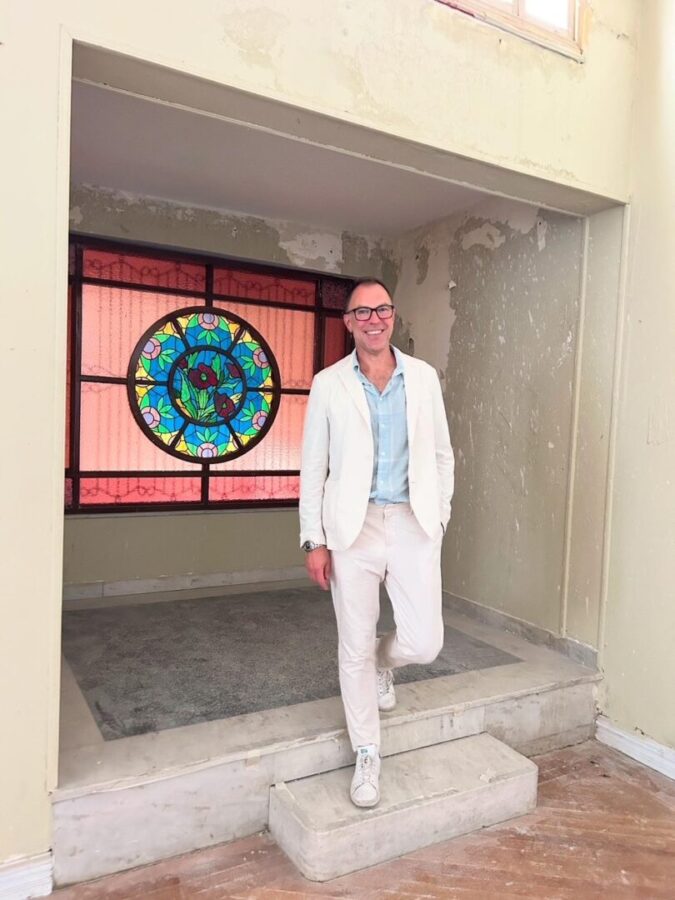
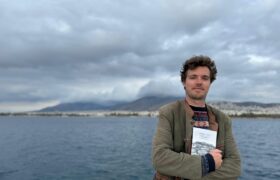
Few figures in the international art world wear as many hats as Matthias Arndt. An art expert, artist agent, and trusted advisor to private collections, museums, foundations, and public institutions, he is now poised to inject fresh energy into Athens’ contemporary art scene with the launch of his new art space on Ithakis Street in Kypseli. Arndt, who also runs a foundation dedicated to supporting emerging artists, speaks about patronage, and his vision for Athens as a growing cultural hub.
- The Meaning of Homecoming
Your inaugural exhibition at Ithakis 31 is called Homecoming.Can you tell us about the vision behind this show and why you chose this specific title for it?
Matthias Arndt: The title emerged almost naturally.
On one level, Homecoming reflects my own journey. After decades of living and working across different countries, Athens has gradually become a place where I feel a profound sense of belonging. It is a city I have returned to repeatedly throughout my life, and now it is becoming part of our family’s future, making Athens our European home, while maintaining our home and private artspace near Melbourne Australia.
But the title also refers to something more universal. The exhibition takes inspiration from the Greek idea of nostos, the journey home, and from the story of Odysseus. Homecoming is not only about arriving somewhere geographically. It is about finding a place, a community, or perhaps even a version of oneself. The exhibition became a way of inhabiting the apartment before we begin its restoration. Together with curator Polina Kosmadaki, we invited artists whose works explore memory, identity, place, return and belonging. In that sense, Homecoming is both an exhibition and the first chapter of a much longer story. Polina suggested – and I followed her lead happily – that we first select the core group of Greek artists and then invited international artists to join this exhibition, featuring all together 44 artists.
- The History of the Space
The art space is housed in the former residence of the Nobel Prize-winning poet Odysseas Elytis. How does the history and atmosphere of this specific building influence the way you inhabit it and display contemporary art within its rooms?
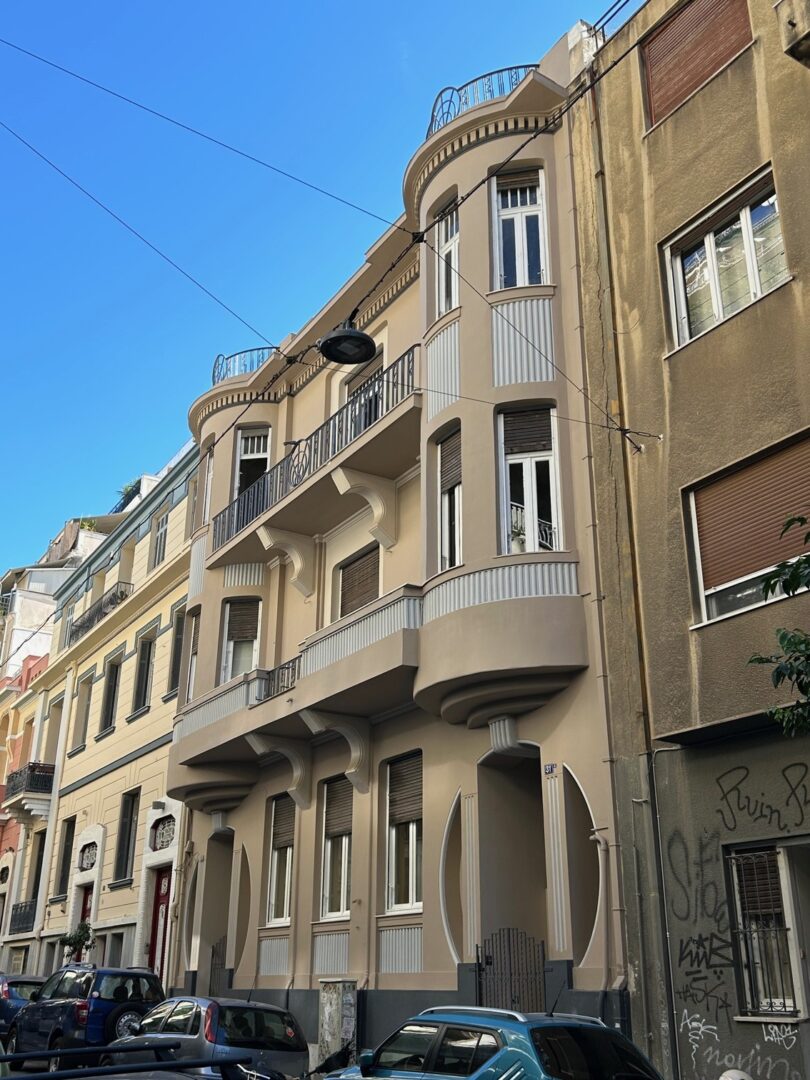
I did not buy the apartment because Odysseas Elytis had lived there. In fact, I only learned about that connection during my first visit. What fascinated me initially was the atmosphere. There was a remarkable sense of light, generosity and calm. The apartment had been unoccupied for decades, yet it still felt alive.
Only later did I begin to understand the cultural significance of the building and Elytis’s relationship to it. That discovery added another layer of meaning. It transformed the apartment from an architectural space into a place carrying memory, poetry and imagination. I don’t see the history of the building as something to be preserved behind glass. Rather, I see it as something to continue. By bringing artists, writers, thinkers and visitors into the space, we are adding another chapter to its story rather than simply commemorating its past.
- Finding Ithakis 31
You have lived and worked in major art capitals like Berlin and Melbourne. What drew you to Athens, and specifically to the neighborhood of Kypseli, for your next permanent space?
Athens has been part of my life for more than four decades. My first journey to Greece was as a teenager, and I have continued returning ever since. What draws me to Athens today is its combination of history, complexity and possibility. It is a city that remains unfinished in the best possible sense. There is an openness here, a sense that things can still be imagined and built.
Kypseli embodies many of those qualities. It is diverse, energetic, creative and deeply human. Different generations, cultures and experiences intersect here every day. The neighbourhood feels authentic because it has not been polished into uniformity. Having spent many years in Berlin, I recognise some of the conditions that once made that city such an exciting place for artists and creative communities. Athens is entirely its own city, but it offers a similar invitation to participate, contribute and help shape what comes next. I personally like getting involved, providing infrastructure, contacts and expertise in areas where my activities can make a difference. I strongly feel Athens is this place for me – and for many other people, both from the arts industry as well as all other domains.
- Setting the Dialogue
The exhibition brings together international postwar masters with contemporary Greek artists. What kind of conversation are you hoping to spark by placing these specific voices together in a domestic setting?
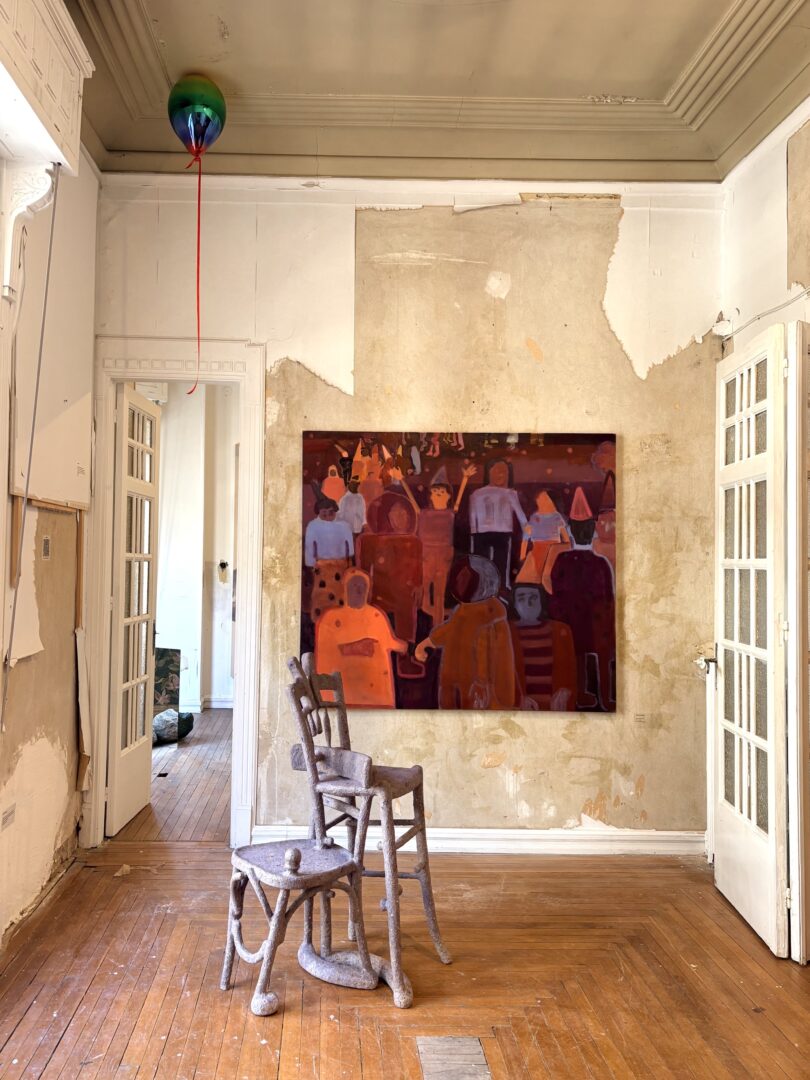
I have never been particularly interested in dividing artists into categories such as local versus international, emerging versus established, or historical versus contemporary. What interests me is dialogue.
For Homecoming, we brought together artists from different generations, cultures and artistic traditions because the exhibition itself revolves around questions that are universal: belonging, displacement, memory, identity and return. The domestic setting plays an important role. When artworks are encountered within a home, they often reveal different qualities. The experience becomes more intimate and less formal. Visitors encounter works not as isolated objects but as participants in a living environment. I hope visitors discover unexpected connections between artists who may initially appear very different. Often the most interesting conversations emerge precisely where distinctions begin to dissolve.
- Blurring the Lines of a Home
This space operates as a hybrid model—part private family residence, part intellectual salon, and part working studio. How do you navigate the balance between running a public art space and maintaining a private family sanctuary?
This is probably the aspect of the project that interests me most. Historically, some of the most important cultural exchanges happened in private homes. The salon tradition was built on the idea that art, literature and ideas flourish through hospitality and conversation.
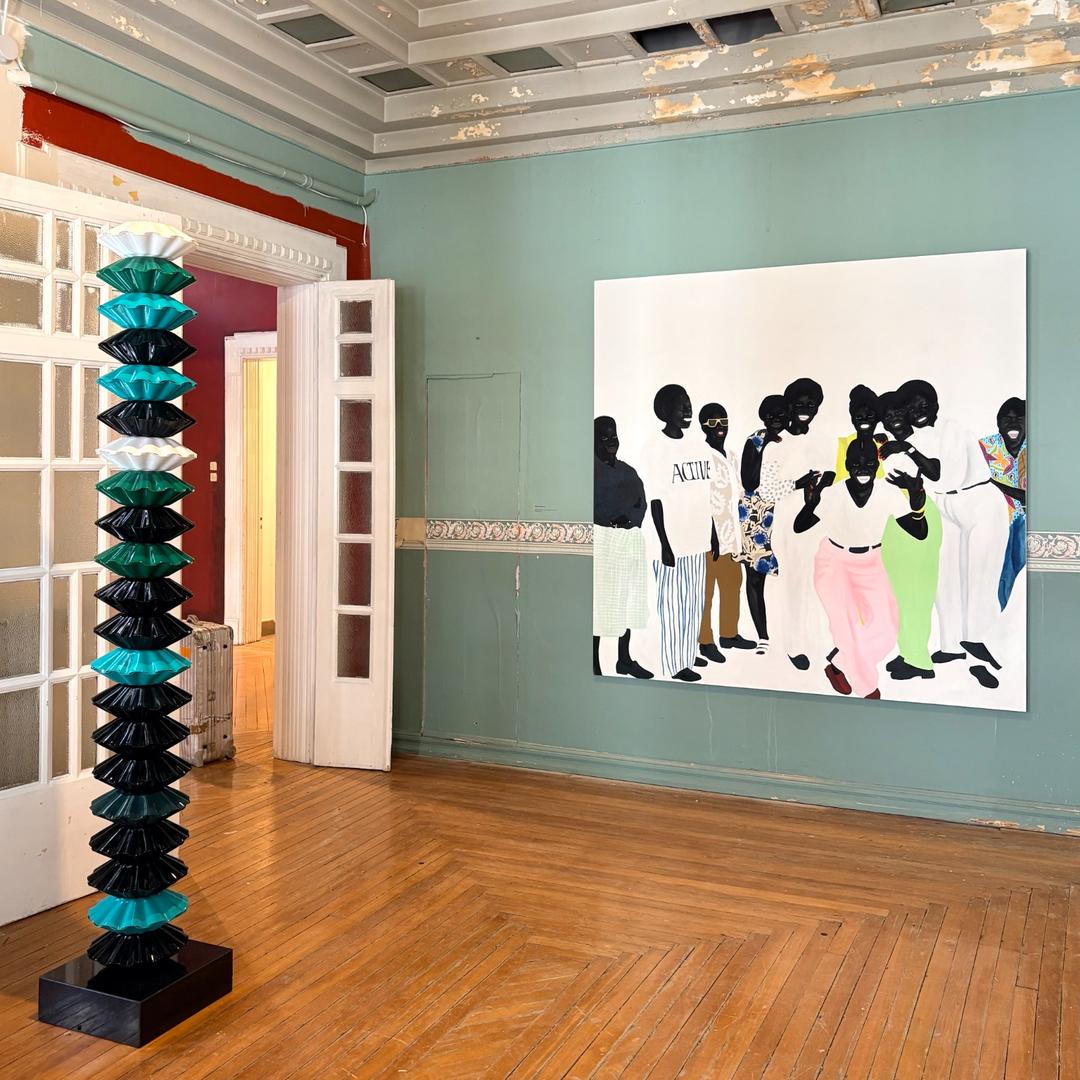
We are not creating a museum or a conventional gallery. Ithakis 31 will remain our home. At the same time, it will be a place where artists, collectors, curators, neighbours and friends can meet. Of course there must be boundaries. Some moments belong to family life and some belong to public programming. But I don’t see these functions as contradictory. In many ways they strengthen each other. The most memorable conversations about art rarely happen in formal settings. They happen around a dinner table, on a terrace, in a library, or during an unexpected encounter. That spirit is central to what we hope to create.
- Contrast with the Artbarn
You previously created a private art space in the wide-open landscape of the Australian outback. How does working within a dense, historic European urban apartment change the way you think about how art inhabits space?
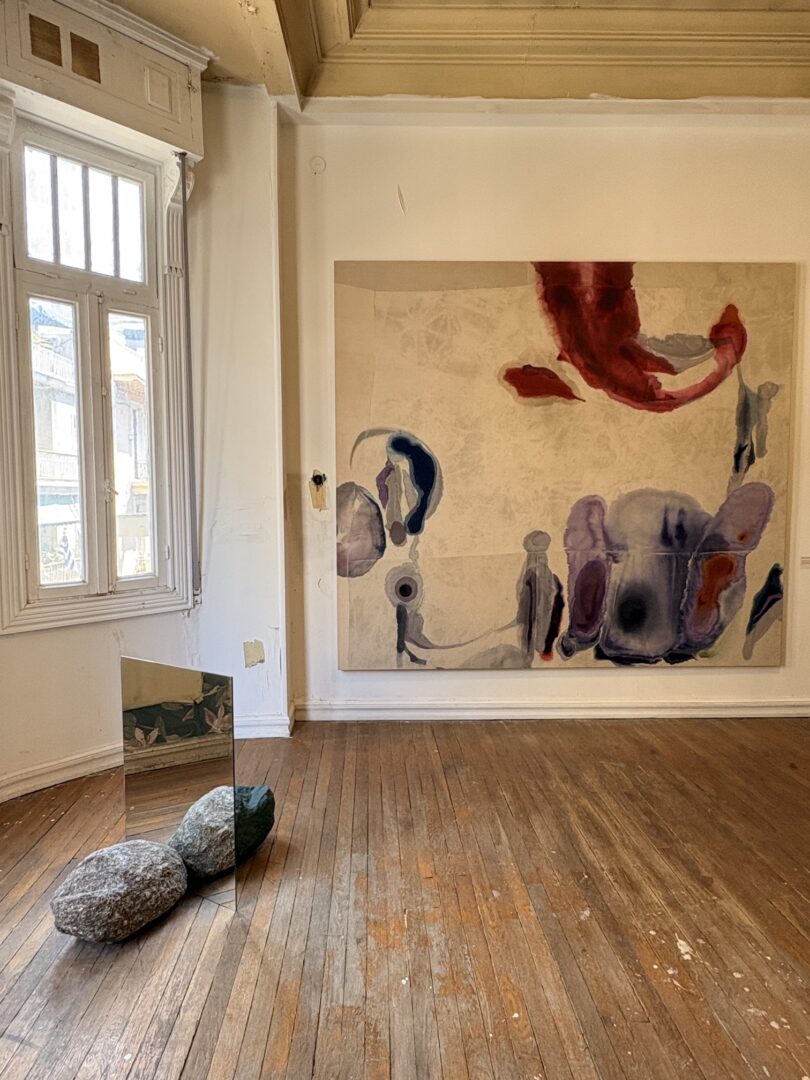
The contrast between the two projects is extraordinary. The Artbarn in Australia sits within an expansive coastal landscape. There the horizon is vast, the rhythm is slow and nature is constantly present. The building enters into a dialogue with the landscape.
Athens is almost the opposite experience. Here art exists within layers of architecture, history and urban life. There is movement everywhere. The city itself becomes part of the conversation. What both projects share is the belief that art should be lived with rather than simply viewed. Whether in a rural landscape or in the centre of a Mediterranean city, art becomes most meaningful when it becomes part of daily life.
The Artbarn invites contemplation. Athens invites exchange. I feel fortunate to have both. Both places though have this personal note, literally as being our homes, but also because we want personal encounter and dialogue, between visitors and the art, between the artists and the audience and of course we love to converse, meet and encounter new perspectives on art, life and community.
- Intuition vs. Strategy
You have described yourself as a “fast looker” when it comes to identifying art and spaces. Can you tell us more about this? Is it innate or can others learn what sounds like a valuable skill?
People often imagine intuition as something mysterious. I think it is largely the result of experience. Over the last thirty-five years I have visited thousands of exhibitions, hundreds of artist studios and countless collections. At some point, all those experiences begin to form a kind of visual memory.
When I encounter an artwork, an artist or even a building, I often have a very immediate reaction. That first response can happen within seconds. But intuition is only the beginning. Afterwards comes research, conversation, reflection and due diligence. Can it be learned? Absolutely. Looking is a skill. The more one practices it, the stronger it becomes. The challenge today is that people often look quickly but rarely look deeply. Developing one’s eye requires curiosity, patience and repetition.
- Learning to Look
For the guests and aspiring collectors reading this, the global art market can often feel overwhelming. What is your advice to someone who wants to start their own collection but doesn’t know how to trust their own eye?
My advice as an art expert and advisor is simple: buy what genuinely moves you, art that resonates with you. This must not be a pleasing experience, confirming your current state of mind or knowledge. Art can and has to be uncomfortable also, literally taking us out of our comfort zone, opening up new views perspectives. Not giving answers but helping us to formulate a better question, art is a major vehicle to understand and navigate the world in its ever growing complexity.
Many people enter the art world believing there is a secret formula. They worry about investment potential, trends, auction results or what other collectors are buying. Those things have their place, but they should not be the starting point.
A collection is ultimately a reflection of a life. The works you choose will accompany you for years, sometimes decades. They should challenge you, inspire you and continue revealing new things over time. The best way to develop confidence is to look as much as possible. Visit museums, galleries, artist studios and private collections. Read, ask questions and remain curious.
Most importantly, trust your own response. The greatest collectors I know are not necessarily the wealthiest. They are the people who have learned to see, who follow their intuition and who are passionate enough, also to exceed their budgets or limitations of space. Collecting starts where you have long run out of wall space… Which is why I am so grateful to have a few homes around the globe (and a large art storage, we built).
- Can you tell us what a perfect day in Athens looks like for you?
A perfect day in Athens for me begins early: I love my morning walks. From our current small pied-à-terre in Petralona, it is usually a walk around the Acropolis Hill, up through Plaka and back via Monastiraki and Philopappos Hill. Soon, it will be through Kypseli and Pedion tou Areos.
I start the first of many email and phone sessions with a coffee – either at Dexameni or, when in Kypseli, on Agios Georgios Square, or in one of the many wonderful cafés and bars scattered across the city. The day might then take me almost anywhere: a visit to an artist’s studio, a conversation with a curator, lunch with friends, a museum exhibition, or simply time spent working from the apartment.
I am still getting my bearings in Athens, but I love holding meetings on the terrace of the Benaki Museum. When I treat myself, I work from the beach – at Athines by the Sea or further down in Voula, where I can focus, work and walk and be totally “incognito” amongst the tourists. Otherwise, I tend to stay in Kypseli or the Kolonaki area for business meetings.
For a casual lunch with friends visiting from abroad, I enjoy Margaro. Dopios never disappoints, and when in Kolonaki we often go to Papadakis, while in Kypseli I love Ntylan. One of the things I love most about Athens is that the city rewards curiosity. The best moments are rarely the ones that were planned. They happen through chance encounters and unexpected conversations.
In the evening, I enjoy gathering people around a table – artists, collectors, neighbours, and friends passing through the city. Athens has a wonderful culture of conversation and hospitality.
For dinner – and Athens is a true food paradise, of which I feel I have only experienced the tip of the iceberg – I love Vulkanizater when in the Petralona area and Fita. I always enjoy Ntylan in Kypseli, and I also like Old School and To Kafenio in Kolonaki, which reminds me a little of Paris Bar in Berlin. If there is a common thread running through my favourite days here, it is that they always leave room for surprise. Athens is a city that constantly reminds me that some of life’s most meaningful experiences cannot be scheduled.
Arndt, Ithakis 31, Kypseli.